
Experiential marketing can take many shapes, from a temporary retail space to a campaign that travels directly to the audience. The right approach depends on the brand’s goals, target audience, product, location, and the kind of interaction the moment calls for.
This guide covers six main types of experiential marketing and when each one tends to work best, so brands can choose an approach that supports the objective instead of chasing whatever format looks most impressive on paper.

1. Pop-Up Experiences
Temporary branded spaces let brands build a focused environment around a product, campaign, or story. This category includes pop-up shops, temporary showrooms, themed installations, and limited-time spaces built for a specific window of time.
Pop-up experiences tend to work well for product launches, limited-edition releases, retail-focused campaigns, and brands that need a controlled, immersive space to tell a fuller story. They’re also effective when a campaign is designed to create a sense of urgency or exclusivity.
A beauty brand launching a new product line, for example, might build a pop-up shop where visitors can test formulas, get a personalized consultation, and purchase before the product hits shelves. The controlled space lets every detail, from lighting to staff scripting, reinforce the launch story.
Because the space is temporary, brands can take creative risks they might avoid in a permanent retail setting. A bolder color palette, an unconventional layout, or an experience built around a single product moment all become easier to justify when the space only needs to perform for a few weeks.
2. Mobile Marketing Activations
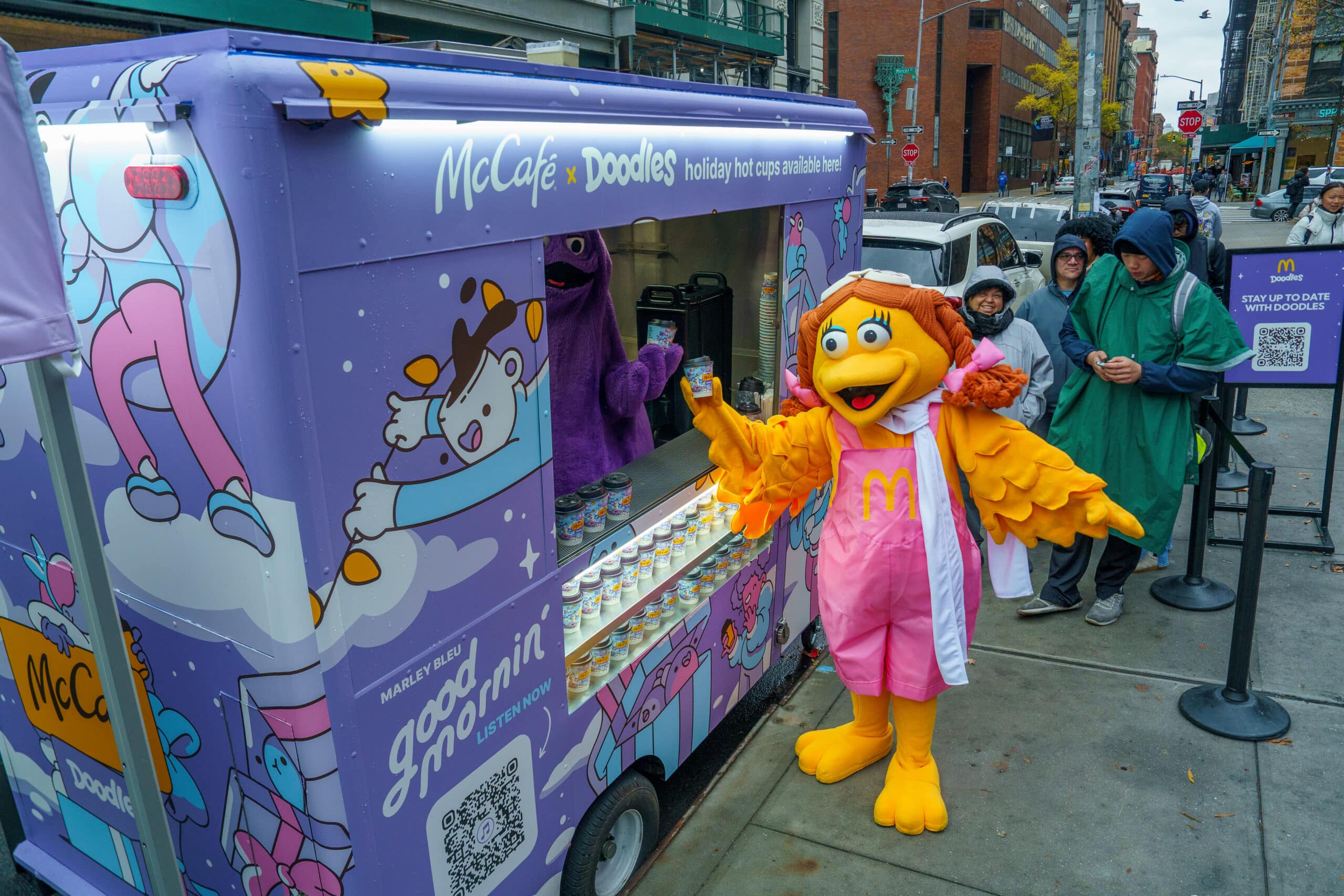
Branded vehicles, trailers, buses, carts, and other mobile setups bring the experience directly to audiences across multiple locations. That mobility is the main advantage: a single activation can reach different neighborhoods, campuses, events, or markets without depending on one permanent venue.
Mobile activations tend to work best for multi-city campaigns and tours, high-traffic campaigns targeting several geographic markets, product demonstrations or sampling tours, and campaigns that need flexibility and strong visibility. A mobile campaign can combine physical branding, product displays, live demonstrations, staff interaction, and social content within one traveling activation, which makes it one of the more versatile types on this list.
Branded vehicles range widely in format, from food trucks and glass box trucks to vintage vans, Airstream trailers, and even motorcycles with sampling sidecars. Each vehicle type carries a different feel, so the choice should match the brand’s tone as much as its logistical needs.
3. Product Sampling and Demonstrations
Sampling campaigns let audiences experience a product firsthand before deciding whether to buy it. This spans food and beverage sampling, beauty demonstrations, technology trials, test drives, and other guided product interactions.
Product sampling tends to work best when introducing an unfamiliar product, demonstrating a clear benefit, encouraging trial and purchase, collecting immediate feedback, or supporting a retail or seasonal launch. Successful sampling involves more than handing someone a free product. The interaction should help the person understand what the product does, why it matters, and what brand stands behind it.
The staff running the sample table often matter as much as the product itself. A brand ambassador who can answer a real question about ingredients, sourcing, or use cases builds far more trust than one who simply hands over a cup or a swatch and moves on to the next person in line.
4. Immersive and Interactive Experiences
Immersive activations place participants inside a branded environment or story rather than having them observe from a distance. This category includes interactive installations, sensory spaces, games, personalized experiences, augmented reality, virtual reality, and other technology-driven demonstrations.
These experiences tend to work best for brands with a strong visual story, campaigns focused on emotional engagement, complex products that benefit from direct, physical demonstration, and activations designed to be easily shared on social media. Brands looking to create a memorable moment of audience participation, rather than a passive brand encounter, often find this category delivers the strongest results.
This type also tends to require the longest production timeline of the six, since fabrication, technology integration, and staff training all need to work together before a single participant walks through. Brands should plan for that lead time rather than treating it as a format that can be built on short notice.
5. Event-Based Brand Activations
Brands can build experiences within festivals, conferences, sporting events, trade shows, concerts, and other established gatherings. The advantage here is access: the brand benefits from an audience that has already assembled around a shared interest, without having to draw a crowd on its own.
Event-based activations tend to work best for reaching a clearly defined audience, supporting sponsorships or partnerships, launching a product within a relevant industry or community, generating leads and direct interactions, and creating branded hospitality or entertainment. The key is giving attendees a genuine reason to stop, participate, and remember the brand, rather than relying only on signage or a table of giveaways.
Because the surrounding event already sets a tone and a crowd size, brands have less control here than in a standalone activation. The tradeoff is usually worth it: a well-placed presence at the right event can put a brand in front of thousands of qualified attendees in a single day, all of whom arrived on their own accord.
Sponsorship placement also matters more in this category than in the others. A booth or activation tucked away from the main traffic flow will underperform no matter how strong the concept is, so brands should weigh placement as carefully as they weigh which event to join in the first place.
6. Guerrilla Marketing and Public Stunts
Guerrilla campaigns use unexpected locations, surprising concepts, public installations, performances, or attention-grabbing stunts to generate interest. These campaigns tend to depend more on creativity, timing, location, and shareability than on a large physical footprint.
Guerrilla marketing tends to work best for building rapid brand awareness, launching bold or unconventional campaigns, reaching audiences in public spaces, and generating social sharing or earned media. Brands considering this route should plan carefully around safety, permits, brand suitability, and how the public is likely to interpret the concept, since a stunt that misreads its audience can generate the wrong kind of attention.
This category rewards restraint as much as boldness. The strongest guerrilla campaigns tend to have a single clear idea executed well, rather than several competing concepts layered into one stunt. A concept that needs a long explanation to make sense usually is not ready for a public space.

How to Choose the Right Type of Experiential Marketing
Comparing these six options starts with the campaign objective, not with whichever format looks the most visually impressive. Marketers should weigh the primary campaign goal, audience location and behavior, the type of participation required, whether the campaign should stay in one place or travel, product demonstration needs, available space, timing, and budget, and opportunities for social amplification.
These categories are not mutually exclusive. Campaigns often combine multiple types when the formats support the same objective. A mobile activation, for example, might include product sampling, live demonstrations, and an immersive element all within one traveling setup, layering several strengths into a single campaign.
Budget and timeline should factor into this decision too. An immersive installation with custom fabrication and technology will typically need a longer lead time and a larger budget than a mobile sampling tour, so the right type on paper still has to be realistic given what a brand can build and staff in the time available.
Match the Experience to the Campaign Goal
There is no single experiential type that works for every brand or every campaign. The right choice depends on what the audience should see, feel, learn, or do during the interaction, and no amount of creative polish makes up for choosing the wrong type for the goal.
The brands that get the most out of experiential marketing tend to treat this decision as strategic, not stylistic. They pick a type because it fits the objective, then let the creative execution do the rest of the work.
If you’re weighing which experiential approach fits your next campaign, we can help you match the format to the objective. Start the conversation with our team at kim@wearesweeter.com.