
A branded food truck combines mobility, visual advertising, product interaction, and live audience engagement in a single campaign format. But attracting a crowd takes more than wrapping a vehicle and handing out free samples. It takes a plan.
This guide covers how brands use strategic location planning, creative design, and promotion to turn a food truck into a campaign that generates real foot traffic and lasting buzz.
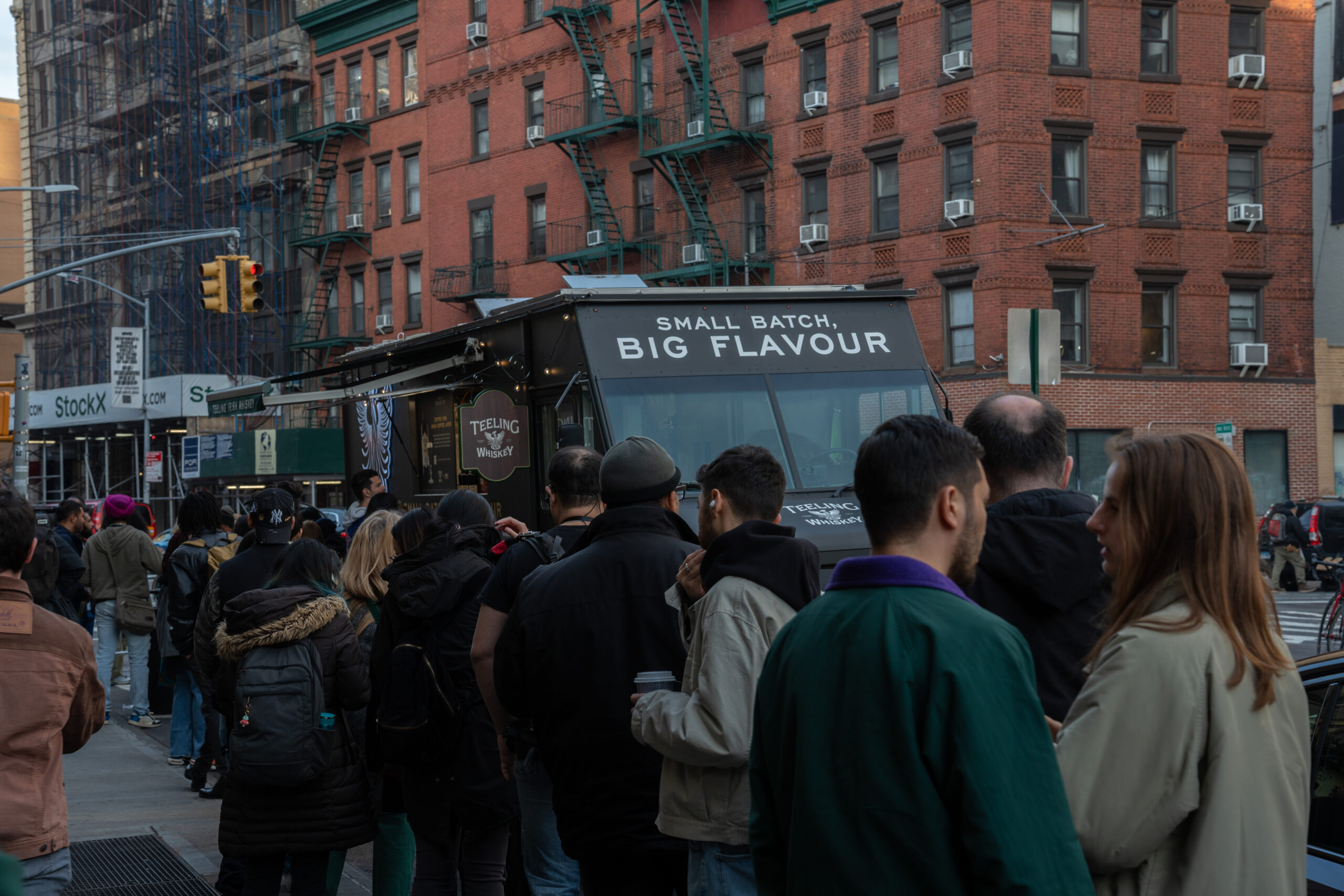
What Is Food Truck Marketing?
Food truck marketing is the use of a branded food truck or mobile food experience to promote a company, product, service, or campaign. The truck itself does several jobs at once: it functions as a mobile billboard, a sampling station, an event space, a content backdrop, and a direct point of interaction between the brand and its audience.
That combination is what makes the format valuable. A single truck can carry a campaign’s visual identity, its product, and its message to wherever the target audience already spends time.
Start With a Clear Campaign Goal
Every food truck campaign should begin with a clear answer to what the audience should do, feel, or remember after the interaction. Common goals include introducing a new product, encouraging trial, increasing awareness, collecting leads or sign-ups, supporting a launch or cultural moment, and generating content or earned media.
That goal should influence every decision that follows, including truck design, menu, route, staffing, interaction style, and the metrics used to measure success. A campaign built to collect leads looks different from one built purely to generate social content, even if both use the same truck.
It helps to write the goal down in specific terms before any creative work begins. “Build awareness” is a starting point, not a finished objective. A brand that defines success as a target number of meaningful conversations, or a set volume of shareable content, gives the entire team something concrete to design around.
Design a Food Truck People Notice
The truck’s exterior often creates the audience’s first impression of the entire campaign. Bold branding, legible messaging, recognizable brand elements, a well-designed service window, signage, and lighting all need to be understood quickly by someone walking past. Brands should treat the truck as both a mobile advertisement and a physical campaign space, one that grabs attention while clearly communicating what is happening and why someone should approach.
Small details matter here. A menu board that is hard to read from ten feet away, or a service window that is not obviously the point of interaction, can quiet an otherwise strong design.
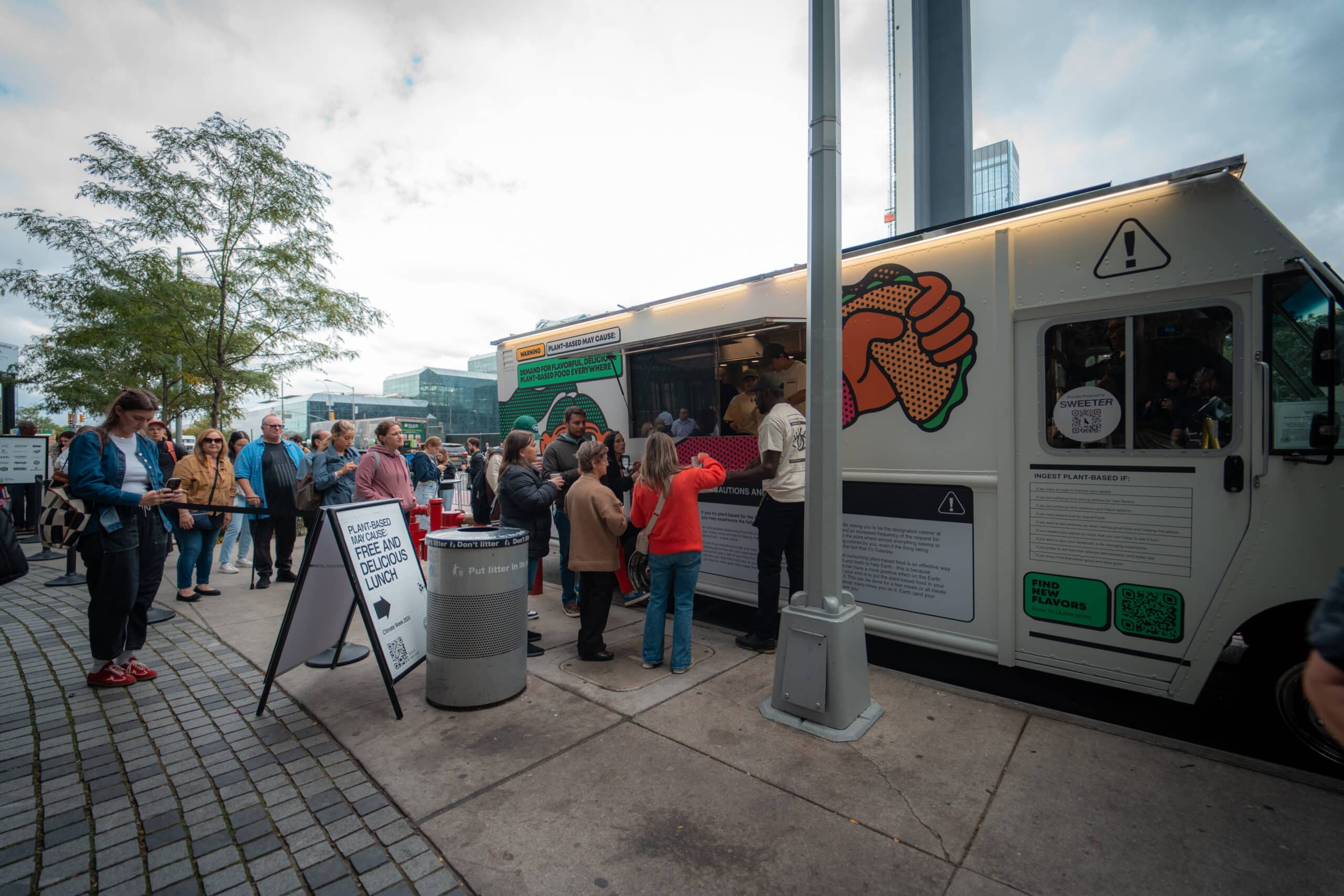

Choose Locations That Generate the Right Foot Traffic
A busy location is only valuable when the people passing through match the campaign’s intended audience. Brands should evaluate audience demographics and behavior, pedestrian volume and peak hours, nearby offices, campuses, retailers, or venues, festivals, conferences, and cultural events, and practical factors like visibility, accessibility, parking, permits, and service requirements.
There is a real difference between attracting a large crowd and reaching the right one. Multi-city campaigns should adapt their route and schedule to the behavior of each local market rather than repeating the same plan in every stop.
Weather and seasonal timing deserve a place in this planning too. A truck built for a summer sampling tour needs a different service setup than one running through a winter market, and a plan that only accounts for ideal conditions tends to fall apart the first time conditions are not ideal.
Give People a Reason to Stop
The offer and interaction should give people an immediate reason to approach the truck. That could be a relevant sample, an exclusive menu item, a live demonstration, a limited-time giveaway, a customization opportunity, a contest, or a performance. The food or giveaway should connect naturally to the campaign message rather than functioning as an unrelated incentive tacked on for foot traffic.
The strongest interactions leave people with something to remember about the brand after the conversation ends, not just a full stomach.
Promote the Food Truck Before It Arrives
Pre-event promotion builds anticipation and gives the audience the information they need to find the activation. That includes announcing the date, time, and location, sharing route stops for mobile tours, teasing the menu or campaign concept, working with event partners or local organizations, inviting creators, media, or community groups, and using countdowns and location-based social content.
Clear, consistent communication matters most when the truck is visiting multiple locations or operating during a limited window, since a missed post can mean a missed line of people.
Create Moments People Want to Share
A food truck campaign can extend well past its physical audience when the activation includes visually distinctive, easy-to-share moments. Branded photo opportunities, packaging, menu presentation, interactive displays, and creator participation all contribute to this. A simple social prompt can go a long way, but it should feel like a natural result of the experience rather than a forced requirement.
The physical design and campaign story should hold up even when someone only encounters it through a photo or a short video, since that is how most of the audience will actually see it. That means the brand’s key message needs to be legible in a single frame, not something that only comes through after a full conversation at the window.

Use Brand Ambassadors to Build Personal Connections
Trained brand ambassadors welcome participants, communicate the campaign message, guide interactions, manage the flow of the activation, and answer questions. Staff should understand both the practical responsibilities of the event and the brand story they represent.
Tone, appearance, and behavior should stay consistent with the campaign while still feeling approachable and natural. A team that sounds like they memorized a script tends to create less trust than one that can hold a real conversation about the product.
Extend the Campaign Beyond the Truck
A food truck activation connects to a brand’s broader marketing strategy through social content, email sign-ups, QR codes, landing pages, influencer coverage, retail promotions, public relations, and follow-up communication. These elements let the truck support a larger product launch or awareness campaign instead of operating as a standalone event.
Any follow-up action asked of the audience should stay relevant and voluntary. Piling on unrelated asks tends to dilute the goodwill built during the activation itself.
Measure Foot Traffic, Engagement, and Buzz
Measurement should connect directly to the original campaign objective. Practical metrics include samples or products distributed, estimated foot traffic, meaningful interactions, QR code scans or landing page visits, sign-ups, leads, or redemptions, social mentions and user-generated content, earned media coverage, and audience feedback and sentiment.
Distribution volume alone does not show whether a campaign created genuine engagement or shifted brand perception. A truck that gave away fewer samples but generated stronger conversations and more shared content may have performed better than one that moved more product with less connection.
Building measurement into the plan before launch also makes it possible to compare a truck’s performance across markets. A campaign that runs in five cities gains far more value when each stop is tracked the same way, since it turns anecdotal wins into a pattern the brand can repeat.
What Makes Food Truck Marketing Successful
Successful food truck marketing depends on more than a branded vehicle and free samples. It comes down to clear campaign goals, strategic locations, strong visual branding, meaningful audience interaction, trained brand ambassadors, and integration with the broader marketing strategy.
The most effective campaigns create memorable experiences that attract the right audience, encourage participation, and leave a lasting impression rather than simply generating a line of people at a window.
Bring Your Brand Directly to the Crowd
Effective food truck marketing brings the brand into places where people can see it, experience it, and interact with it directly. Strong results come from aligning the vehicle, location, offer, staffing, promotion, and measurement around one clear campaign goal.
If you’re ready to bring a branded food truck into your next campaign, we can help you design the vehicle, plan the route, and staff the day. Start the conversation with our team at kim@wearesweeter.com.