

Retail has always depended on location. A store succeeds when it sits where its customers already are, and struggles when shoppers have to go out of their way. For brands, that creates a hard tradeoff: permanent storefronts are expensive, slow to open and fixed in place, while the customers they need to reach keep moving.
A mobile pop-up shop changes the equation. Instead of waiting for shoppers to find the store, the store travels to the shoppers. A branded vehicle becomes a boutique, a fitting room, a showroom or a sales counter, parked exactly where the audience gathers on the day it matters most.
For brands launching products, testing markets or building excitement around a moment, the mobile pop-up shop has become one of the most flexible tools available.
The Limits of a Fixed Storefront
Traditional retail locations require long leases, buildout costs and months of planning before opening day. Once open, they serve one neighborhood. If shopping patterns shift or the audience turns out to be somewhere else, the brand has few options.
Static pop-up stores reduce the commitment, but they share the same core limitation. They stay in one place, and they depend on consumers knowing they exist. Many short-term pop-ups spend a large share of their budget simply pulling people through the door.
E-commerce solves reach but loses the experience. Shoppers can’t feel a fabric, test a shade or talk with someone who knows the product. For categories where touch, fit and trial drive purchase decisions, that gap is significant.
How a Mobile Pop-Up Shop Works
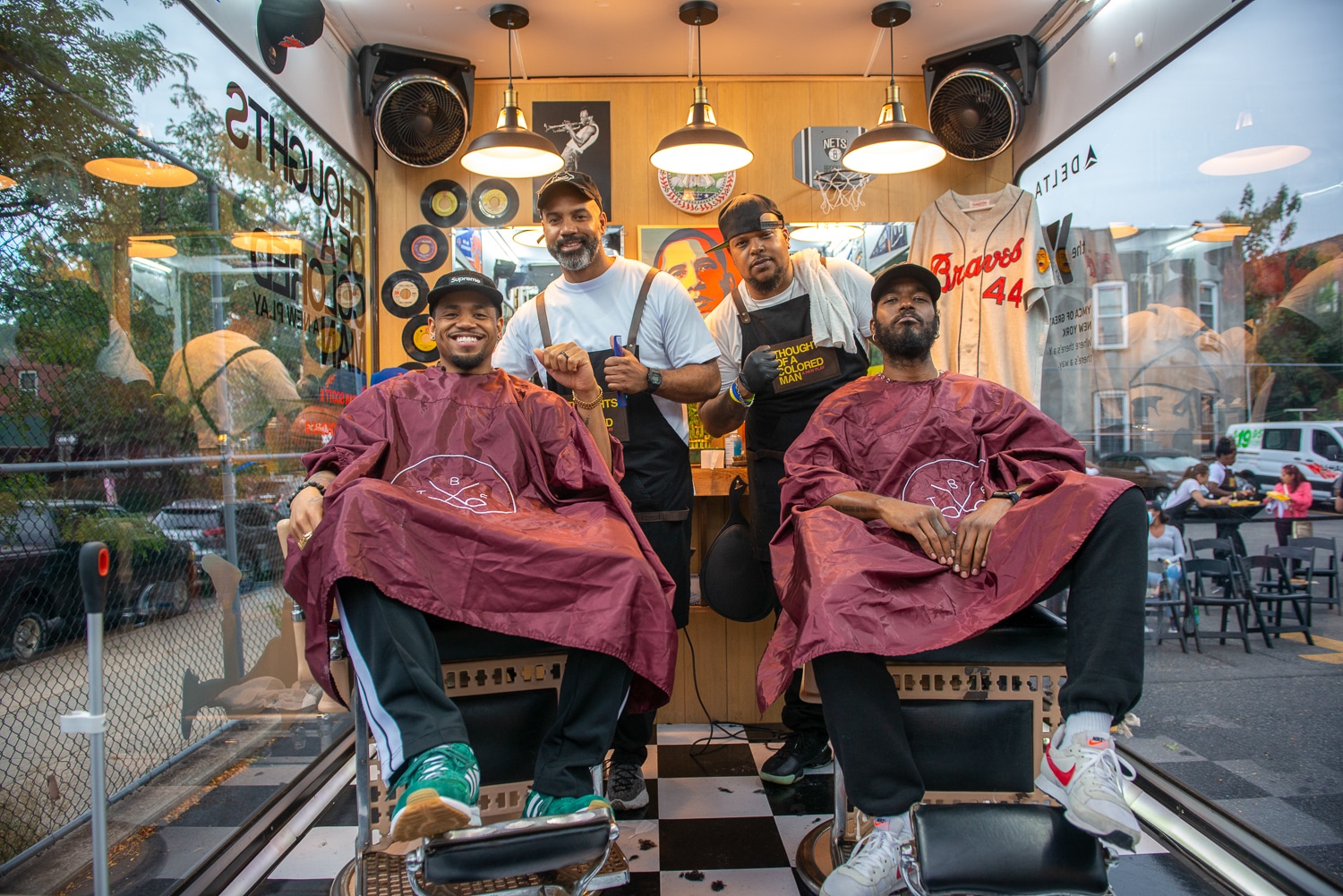
A mobile pop-up shop combines the reach of a tour with the experience of a store. The vehicle is designed around the brand, wrapped and outfitted for the products it carries, then permitted to operate at locations chosen for the target audience.
Depending on the vehicle, the shop can take very different shapes. Glass box trucks and Airstream trailers can be built out so guests step inside, browse and interact with product in a fully branded space. Food trucks and other vehicles work as service-window storefronts, with sales, sampling and demos happening at the window and in a staged area alongside it.
Behind that experience sits a real retail operation: point-of-sale systems, inventory receiving and storage, trained brand ambassadors who can answer questions and close sales, and security for both product and guests.
Design ties it all together. The wrap, signage, lighting and display fixtures should feel like an extension of the brand’s packaging and existing stores, so a shopper who meets the brand on the road recognizes it later on a shelf or a website. That consistency is what turns a single visit into lasting recognition.
The Store Shows Up for the Moment
The strongest mobile pop-up shops are timed around moments when demand peaks. A brand can follow its audience to a convention, a cultural event or a busy shopping district on a holiday weekend, then move on when the moment passes.
Moments like these reward speed. A mobile shop can be designed, wrapped and permitted for a specific event, then reset for the next one, letting a brand show up at several high-demand occasions in a single season without building a new space each time.
Rinna Beauty used that approach during BravoCon in New York City. A branded food truck with a custom matte-finish wrap became a mobile storefront for the brand’s lip kits, operating at BravoCon and in SoHo over two days. Lisa Rinna appeared at the truck both days, drawing thousands of fans who wanted to meet her and buy product. The register rang up hundreds of sales totaling many thousands of dollars.
The operation behind it included special event permits for multiple locations, receiving and inventory management for the product, point-of-sale devices for on-site transactions and security for the celebrity appearance. The result was a store that existed for two days, exactly where the brand’s most engaged fans had gathered.
The Shop Can Sell a Service First
Some of the most effective mobile pop-up shops offer an experience before they sell a product. For brands whose products depend on fit or expertise, the vehicle can host the service that leads to the purchase.
Wacoal partnered with Sweeter for two seasons on a “Fit for the Cure” activation in SoHo supporting the Susan G. Komen Foundation. A decorated glass-walled truck featured a pink photo lounge inside, while a custom-printed tent alongside it hosted private bra fittings with expert consultants, complete with seating, mirrors and heat. Guests enjoyed hot chocolate with branded marshmallows and custom-printed cookies, and a prize wheel awarded branded keepsakes and in-store cash toward a Wacoal purchase.
For every woman who took part, Wacoal made a donation in support of breast cancer awareness. Hundreds of women left properly fitted, and the in-store credit gave each one a reason to continue the relationship at retail.
A Vehicle Can Become a Whole World
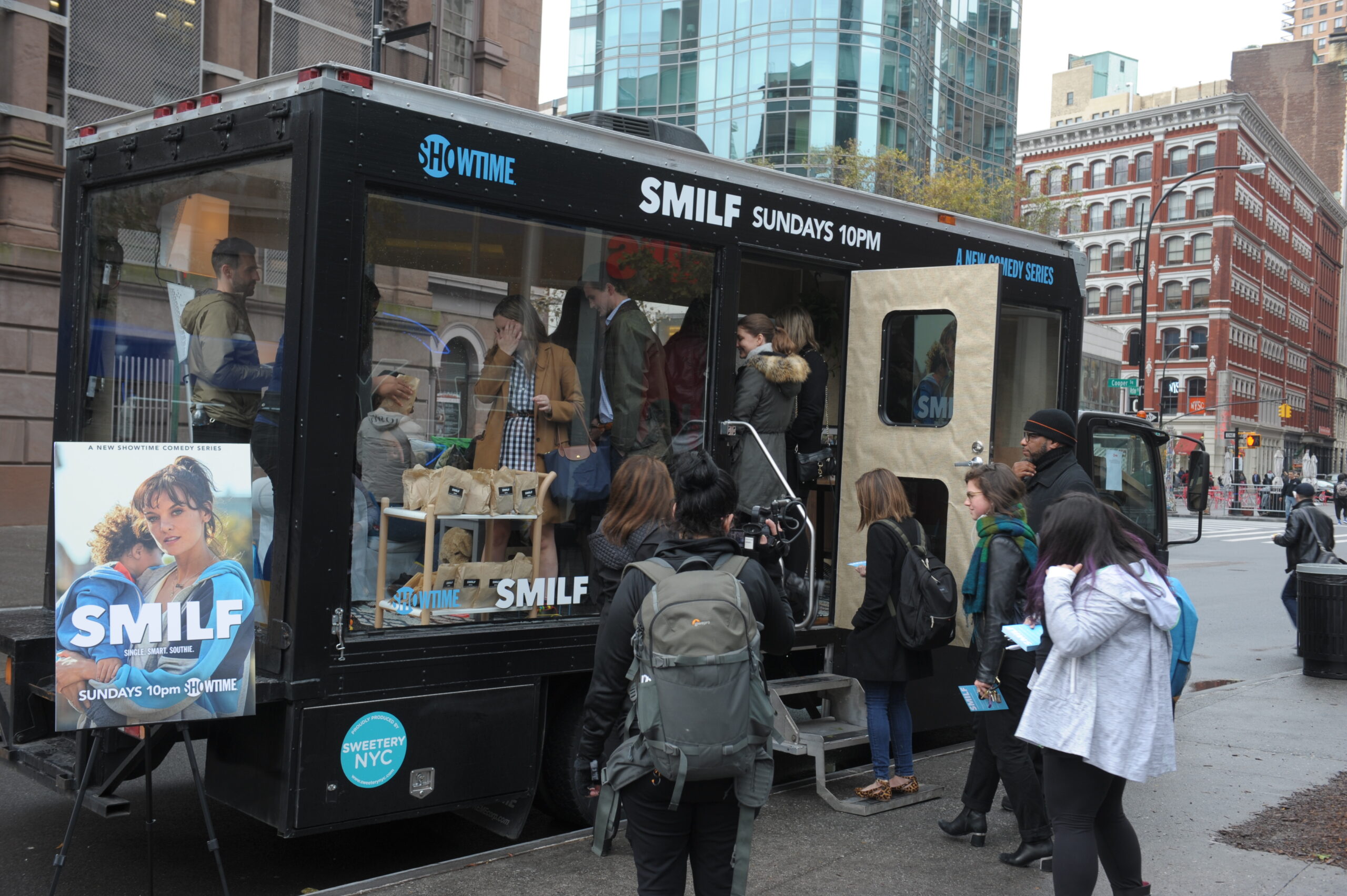
A mobile pop-up shop can also work as a set, giving consumers a physical version of a brand’s story. Glass box trucks are especially suited to this, since passersby can see the experience inside before they step in.
To promote its new series “SMILF,” Showtime worked with Sweeter to turn a glass-walled truck into an apartment on wheels modeled on the show’s single-mom Boston setting. Guests stepped inside for one-on-one dating advice from relationship experts with the satire site Reductress, took photos in a booth that produced instant profile pictures, and sampled chocolate-dipped bacon and Boston cream doughnuts. Brand ambassadors outside recruited consumers to sign up for Showtime app subscriptions.
The truck sold a subscription the way a store sells a product: by letting people experience what they’d be buying.
Every Stop Doubles as Market Research
A mobile pop-up shop gives brands something a permanent store can’t: the ability to test several neighborhoods, cities or audiences in a short period. Sales by location, questions from shoppers and the products that sell out first all reveal where demand is strongest.
That information is valuable for brands weighing a permanent retail footprint, a wholesale expansion or a new product line. Rather than signing a lease based on projections, a brand can gather real sales data from several locations first, then commit where the numbers support it.
Brand ambassadors add a qualitative layer. Their conversations with shoppers surface objections, favorite features and questions that never show up in a sales report, giving the brand a clearer picture of how its product lands in person.
What Makes a Mobile Pop-Up Shop Succeed
Across categories, the same fundamentals decide whether a mobile pop-up shop performs. Location comes first, because even the best-designed vehicle depends on reaching the right audience at the right hour. Permitting follows closely, since retail sales and special events often carry different requirements from simple sampling.
Inventory planning matters more than many brands expect. A vehicle has limited storage, so product mix, restocking and backup supply need to be mapped before opening day. Staffing rounds it out. Brand ambassadors in a mobile shop act as salespeople, product experts and hosts at once, and they need training for all three roles.
When a Permanent Location Still Makes Sense
Mobile pop-up shops aren’t a replacement for every retail strategy. Brands with steady, predictable demand in a single market often benefit more from a permanent storefront that builds long-term neighborhood loyalty. Products with large inventories or complex fulfillment needs may outgrow what a vehicle can carry. And brands that rely on frequent repeat purchases may find e-commerce and subscription models more efficient.
The mobile pop-up shop is strongest as a launch, testing or event-driven tool, used when a brand needs to meet customers at a specific moment.
Bringing the Store to Your Customers
The idea behind a mobile pop-up shop is simple: retail works best where customers already are. A vehicle that can become a boutique, a fitting room or a set gives brands that reach without the commitment of a lease.
We build each mobile pop-up shop around the brand’s products, audience and goals, handling design, fabrication, permitting, inventory, staffing and point-of-sale as one plan. If your brand is ready to take its store on the road, Start the Conversation with Kim Healing at kim@wearesweeter.com.