

Every brand activation starts with the same promise on paper: put the product in front of the right people and give them a reason to remember it. The gap between activations that deliver on that promise and the ones that fade by the next morning rarely comes down to budget. It comes down to how clearly the idea connects to the brand, and how well the plan holds up once real people show up.
Case studies are the most useful way to see that gap. Strategy decks describe what a campaign intends to do. A finished activation shows what actually happened: how many people engaged, what they walked away with and what the brand learned along the way.
The six campaigns below span product launches, entertainment premieres, Fashion Week and a multistate sampling tour. Each one solved a different problem, and each one offers a lesson brands can apply to their own planning.
What Makes a Brand Activation Work
Strong activations share a few traits regardless of category. The concept ties directly to the product or story, so guests understand the brand without a sales pitch. The experience gives people something tangible, whether that’s a sample, a keepsake or a moment worth posting. And the operation behind it, from permitting to staffing to inventory, is built to keep the experience consistent for every guest, at every hour.
That last trait is the one most often underestimated. A clever idea that stalls under a long line or a missing permit loses its impact fast. The examples that follow worked because the idea and the execution were planned together.
Jovē Water Turned a Product Launch Into an 11-City Tour
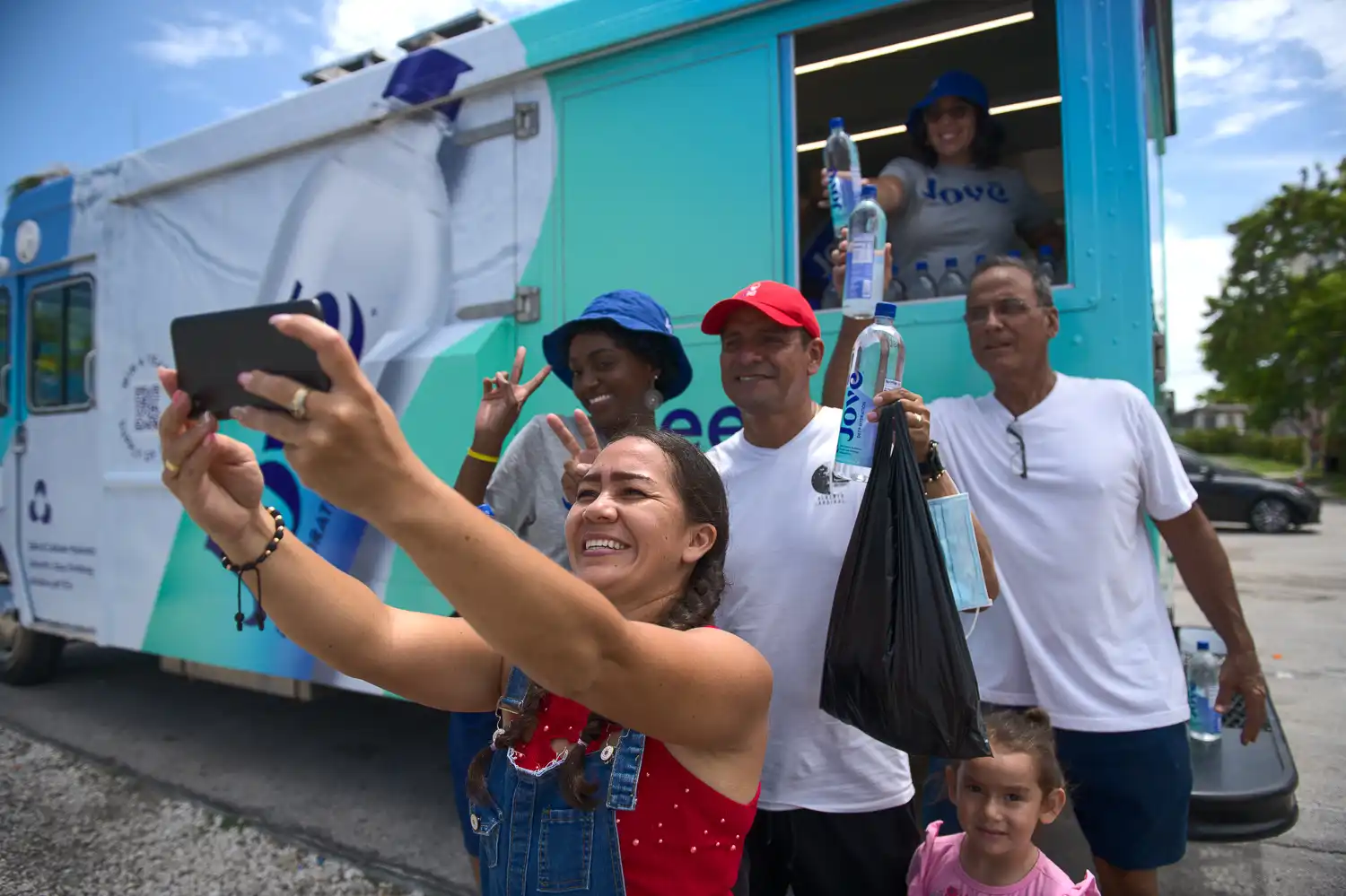
When Jovē Water’s PR agency, CIIC PR, set out to introduce the new alkaline water brand to consumers, the plan called for reaching people across Pennsylvania, Florida and Tennessee during the hottest stretch of summer. The answer was a branded hydration truck that toured for two months, stopping in 11 cities and handing out 27,000 one-liter bottles.
The timing did much of the persuasive work. A cold bottle of water in July needs no explanation, and every handoff put the product in a consumer’s hand at the moment it mattered most. A QR code on the truck offered guests a chance to win a year’s supply of Jovē, which kept lines moving while capturing data the brand could use after the tour ended.
Behind the scenes, location scouting and permitting had to happen fresh in each city, and tens of thousands of bottles had to be received and stored before a single one reached a guest. The lesson: a sampling tour is only as strong as the logistics plan supporting it.
Too Faced Translated a Makeup Line Into a Flavor
Too Faced Cosmetics needed a way to make its Peaches & Cream collection feel as indulgent as its name. Rather than rely on product swatches alone, the brand activation started in the kitchen, with a custom ice cream flavor developed to match the makeup line.
The campaign then moved in three directions. Thousands of pints shipped across the U.S. and Canada to support in-store events at Sephora. A custom 1-pint cube container went to 550 beauty bloggers and influencers, giving them a ready-made reason to post. The campaign closed in New York City, where a branded food truck handed out 5,000 servings in custom-printed cups outside two Sephora locations.
The lesson: when a product is hard to experience through a screen, translating it into another sense, in this case taste, gives consumers a memorable way in.
Circle K Let the Food Speak Before the Brand Did
Circle K wanted consumers to rethink what convenience store food could be. Instead of announcing a new menu, the brand worked with its PR firm and Sweeter on a reveal. A food truck branded only as “Bistro to Go” toured Charlotte, Myrtle Beach and Tampa, serving guests what looked like an upscale fast-food meal.
Once guests had tasted the food, the team revealed on camera that everything came from Circle K’s new menu, available at its convenience stores. Those genuine reactions became the campaign’s content.
Making the stunt credible meant replicating the in-store product exactly. A proprietary speed oven and coffee maker were installed and secured inside the truck for travel, and Circle K’s executive chef prepared the food himself while talking with guests about the menu. Every city also required its own permits.
The lesson: a reveal lets the product earn a fair hearing before existing brand perceptions get in the way.
Barrow Brought Its Color Palette to Fashion Week
Fashion Week is one of the most crowded stretches of the year for brand activation in New York City. Italian streetwear brand Barrow needed a way to stand out among dozens of labels competing for the same fashion-focused crowd.
The solution was custom gelato made in Barrow’s brand colors, served in branded cups to 2,000 guests across Fashion Week venues. The treat carried the brand’s visual identity directly into guests’ hands and onto their social feeds.
The lesson: in a crowded calendar, a sensory detail that reflects the brand’s identity can say more than another logo wall.
The New York Post and FOX Gave a Premiere Something to Taste
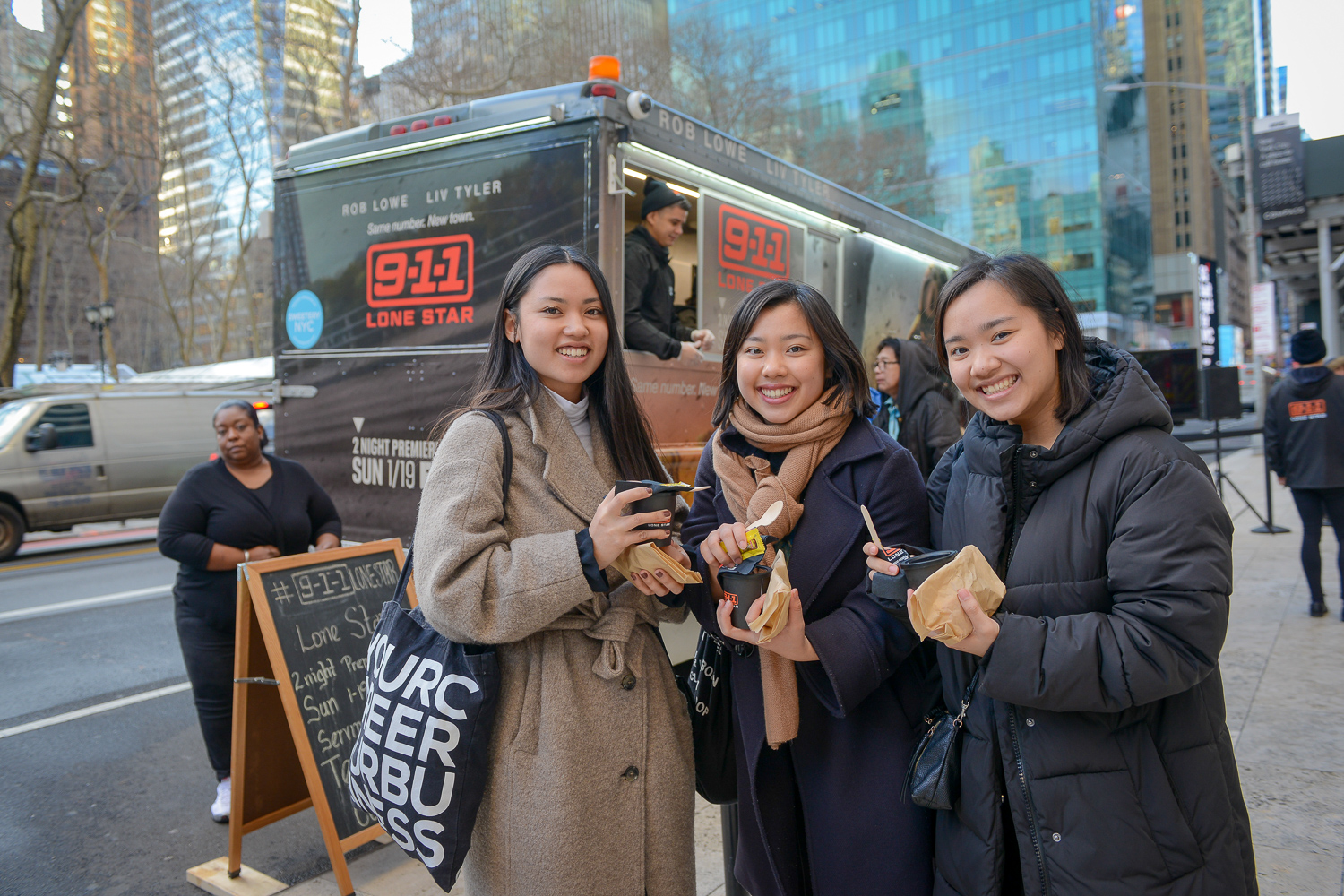
To introduce “9-1-1: Lone Star,” the New York Post and FOX brought a Texas-sized idea to Midtown Manhattan. A branded food truck served 1,000 cups of five-alarm Texas chili with country cornbread, a direct nod to the show’s setting and its firefighter characters.
The activation combined media and experience. Brand ambassadors handed out a special edition of the Post with a cover wrap celebrating the series, while a flat-screen monitor and audio system on the truck played the trailer. Branded cups, napkins and wooden spoons reinforced the show’s identity with every serving.
The lesson: partnerships between a media brand and an entertainment property work best when each partner’s strength shows up in the experience.
HBO Turned a Show’s Tour Bus Into a Real One
For the Season 2 premiere of “Hacks,” HBO Max returned to Sweeter through its PR agency to extend a billboard takeover campaign across greater Los Angeles. The centerpiece was a fully branded motor coach, designed on one side to replicate the tour bus from the show and on the other to function as a rolling billboard.
Over three days, the bus visited Beverly Hills, West Hollywood, Hollywood Boulevard, the Santa Monica Pier, HBO’s offices and several media agency partners. A working soda fountain, mirroring the one on the show’s bus, poured hundreds of servings of Coke and Diet Coke in branded cups, while a monitor played the trailer and local brand ambassadors engaged crowds at each stop.
The lesson: when a show’s world already has iconic details, bringing one into real life gives fans a reason to seek it out.
What These Brand Activation Examples Have in Common
Across categories and markets, the same pattern holds. Each campaign started from a clear idea rooted in the product or story. Each gave guests something to take away, from a liter of water to a cup of chili. And each depended on operational planning most guests never saw: permits in every city, custom equipment built for travel, inventory staged ahead of time and trained staff on site.
That combination is what separates a memorable activation from an expensive one. Brands evaluating a brand activation company should look past the concept sketches and ask how a partner handles everything that has to go right once guests arrive.
When a Traditional Campaign Still Makes Sense
Not every objective calls for a live activation. Brands selling to a narrow B2B audience may reach decision-makers more efficiently through targeted digital outreach or trade events. Campaigns with very limited budgets may get more from paid media than from a single underfunded activation. And products with long consideration cycles often depend on content and nurturing more than in-person sampling.
The strongest marketing plans treat activation as one tool among several, used when a brand needs people to taste, touch or experience something firsthand.
Building the Next Example
Every campaign above began with the same question: how do you make people care about something new? The answer looked different each time, but the approach stayed consistent. Build the experience around the brand, and plan the execution as carefully as the idea.
As a brand activation company, we’ve built our work around that approach for brands across beauty, food and beverage, entertainment and fashion. If your brand is planning a launch, premiere or tour, we’d like to hear what you’re working toward. Start the Conversation with Kim Healing at kim@wearesweeter.com.